How This 48-Year-Old Lost 29 Pounds* And Got Off Nearly All Her Medications
Now she feels better than ever.

*At 6 months, participants in a clinical trial of the WW weight-loss program lost an average of 9.7 lbs (5% of body weight). And, people who track their food more often lose more weight. When actual WW members track their food at least two times a week for 6 months they lose on average 16.6 lbs. (7.9% body weight). Yvonne lost weight on a prior program and is continuing on PersonalPoints™.
As told to Katerina Gkionis
Weight wasn’t a problem for me until about three years ago when I was dealt a hand I couldn’t quite handle: Between moving my family of five to a house across town, mourning the death of a close friend, and wrapping my head around my oldest daughter’s high school graduation, I began stress-eating frozen foods like chicken wings and breaded chicken bites, which led to a 45-pound weight gain over eight months.
Although I was just 45 years old, I was also plagued by hot flashes, night sweats, and sleeplessness, symptoms my primary care physician wrote off as early-onset menopause. Lacking the energy to keep up with my son, who was 3 years old at the time, I felt awful that my youngest child was stuck with a mom who was too tired to play outside, go to the park, or roll around on the floor—things I’d done when my older daughters, who are now 19 and 21, were toddlers.
After a bit of blood work, I found out that my blood sugar numbers were higher than normal and I had hypothyroidism, an underactive thyroid that can trigger weight gain and fatigue. My doctor put me on a medication to regulate my thyroid and another to control my blood sugar, then told me to cut out carbs, sugar, and alcohol to help prevent type 2 diabetes.
To launch my own defenses, I decided to return to the workout routine I’d ditched after having my son. Four times a week, I’d drop him off at nursery school and head to the gym, where I’d use a machine similar to an elliptical for my cardio plus light weight lifting and planks. Afterward, I’d feel so exhausted that I had to go home and nap.
Searching for a solution
Six months after launching my new routine, my blood sugar and thyroid numbers remained the same and the scale hadn’t budged, so I decided to see a nurse practitioner for a second opinion. Over the year and a half that followed, she prescribed me eight different medications, including an estrogen cream to balance my hormones, a pill to boost my metabolism, and an injection to suppress my appetite. I also did my own research and started taking several over-the-counter supplements like curcumin to reduce inflammation in my joints. I had a pill box so full that I couldn’t shut it, was spending $125 a month on medicine, and couldn’t even eat my favorite foods or have a glass of wine at dinner. And yet? While my blood sugar wasn’t getting worse, I still had hot flashes, and I still wasn’t losing weight. After all, the diet my doctor prescribed me was so strict that sometimes I’d just give up and order pizza or Chinese takeout.
After 18 months, when I saw a photo of myself wearing my work uniform, my jaw dropped: I was so shocked by how large I looked that I thought my dryer was shrinking my clothes. After confirming that the machine was working perfectly, I had to face the facts: My efforts weren’t paying off.

In August 2018, I saw a third practitioner who couldn’t get over how many medications I was taking. She took me off everything besides my thyroid medication and suggested WW. “Try it for a month, and then come see me,” she said.
RELATED: The #1 doctor-recommended weight-loss program
As it happened, my insurance offered a health savings account incentive for joining WW, so I downloaded the app and dove in.
A forgiving program
On my first day on the program, I ate all my go-to’s—like a granola bar, almonds, chicken thighs, and avocado—and tracked it all. But by the time noon rolled around, my dailyPersonalPoints Budget was depleted, and I ended the day at 43 PersonalPoints—20 above my goal. Initially discouraged, I woke up the next day to find 23 PersonalPoints in my Budget. WW, I realized, doesn’t punish you for slip-ups—it’s a plan you can stick to.
After that, I began eating smaller portions and choosing foods that were lower in fat to stretch my Budget. Snacking on fruit instead of granola bars and swapping chicken thighs for breasts definitely helped.
On losing pounds and pills
In the past year, I’ve lost 29 pounds*. Of course there were weeks when my weight stayed the same rather than going down, but instead of beating myself up, I’d reflect on how much better I felt. If I continue making healthy choices, I’d tell myself, I’ll set myself up for success in due time.
Although I still deal with hot flashes, my sleeplessness and night sweats have subsided now that menopause is behind me. I no longer need blood sugar medication, am taking a third of the thyroid medication that I was taking before I joined WW, and am off my hormone treatments—a major relief.
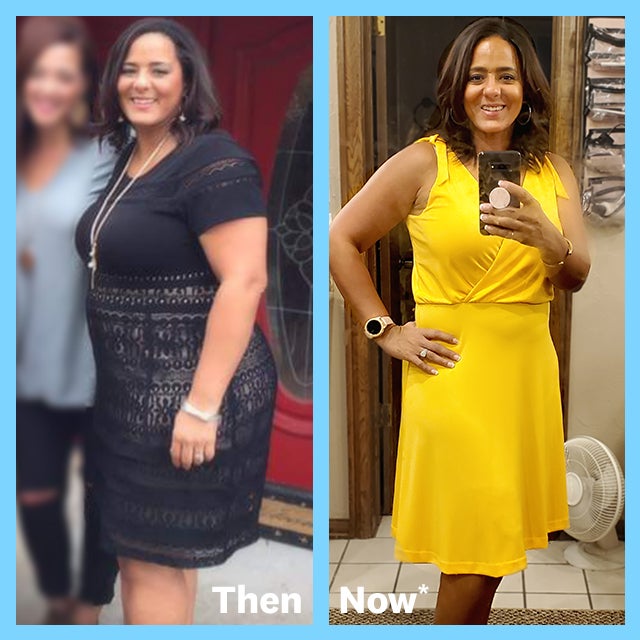
It helps that I don’t have to cut out major food groups to feel like myself. I’ve found a sense of balance in my lifestyle that I’d long been lacking, and I feel better than I have in years.
Explore more WW member weight loss transformations.