Dr. Alexandra Sowa on why your brain is the most important part of a GLP-1 weight-loss journey
In this edition of Weight Watchers Book Club, hear firsthand from Dr. Alexandra Sowa, M.D., author of The Ozempic Revolution, about why she wants you to weigh in daily — and her other GLP-1 tips.
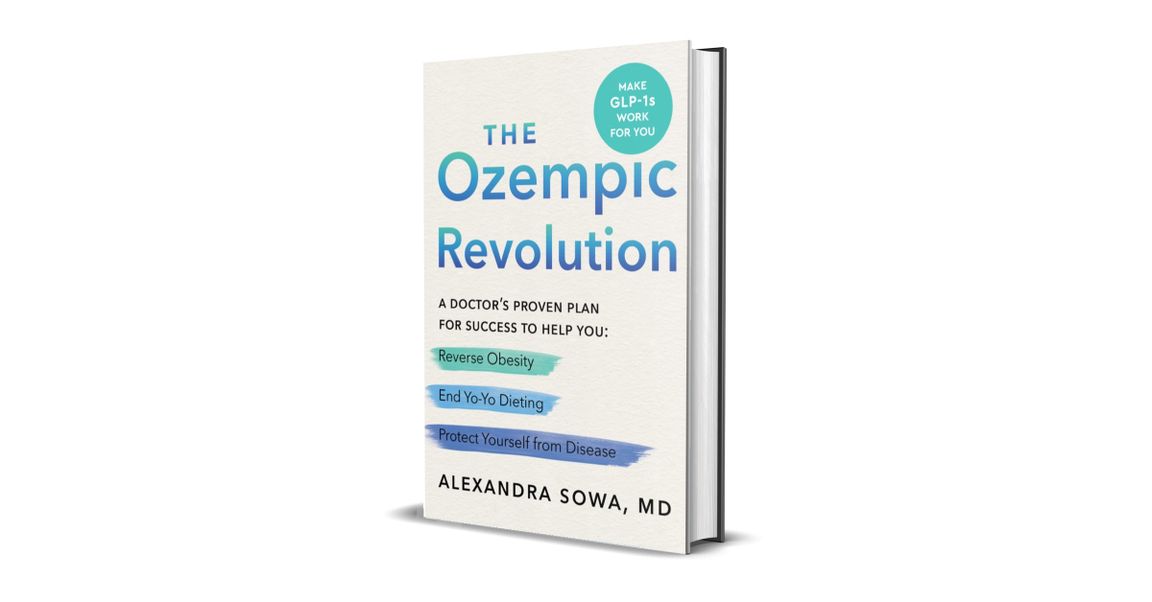
In early 2026, Weight Watchers started a book club series where authors, doctors, thought leaders, and social media influencers lead members through a discussion that’s informative, thoughtful, helpful — and a good time. In front of a live audience (also livestreamed to members at home) at Weight Watchers HQ, Dr. Alexandra Sowa, M.D., a dual-board-certified obesity and internal medicine physician and author of The Ozempic Revolution, spoke with Julie Rice, our chief experience officer.
“She not only teaches people how to eat, but she is also an expert on the emotional aspects of our food journey,” Rice said.
Read on for a full recap of the discussion, including viewer questions from some of the 800 members on the Zoom. To tune into the next book club event in real time, follow Weight Watchers on Instagram or Facebook so you can get access to RSVP links as soon as they’re live. (You can also catch up on previous book club meetings, including about the GLP-1 user guidebook, Weightless.)
How did you get interested in obesity medicine?
Dr. Sowa: Before anyone really knew what a GLP-1 was, I was on my soapbox trying to tell everyone possible that weight was not a willpower issue, and it was not a moral failing. It is biology.
I know this because I come from a family who really struggles with their weight. Both of my grandmothers were doing all of the right things, and I thought, something isn't working for them; this is not about willpower. In my training at NYU, when I learned about the field of obesity medicine, there was nothing else I could do once I found it. I was like, Sign me up.
What made you want to write this book?
Dr. Sowa: I was starting to see — finally — people accepting GLP-1s. But they were just walking out of a doctor's office with a script. And that's just not going to lead to success. We know that, actually, when people just get a script, up to two-thirds of them have stopped the medication by a year later. That's not benefiting people. I wrote the book so I could take all of the knowledge I gained in my practice and give it to the world as a comprehensive, holistic guide. I do not believe in these medications on their own, even though I am the biggest fan of them.
I was a Weight Watchers member in college and after my first son, and I appreciate how it teaches nutrition in an accessible way. The book is similar in teaching how to establish habits, because one of the things that people think about GLP-1s is that they'll just fix everything — and honestly, they do not.
A lot of the things in the book may feel familiar: Log your food; think about how hungry you are; incorporate some exercise. But it's all different with the GLP-1, and so you have to revisit it all again. You need to do these things in order to be successful. And one of the biggest things that I think is not being addressed is that your brain is probably the most important part of this journey — quelling your fears, dealing with past traumas, acknowledging the emotions that come up with weight loss.
Can you explain simply why GLP-1s are a game-changer?
Dr. Sowa: GLP-1s have three superpowers. One, they talk to the brain, and they say, “brain, you do not need to obsess over food all the time. We are going to work on a hormonal level to make you feel appropriately full and appropriately hungry.” Two, it talks to the stomach. It works on a hormonal level, and it slows down the stomach transit time and the way that food moves through your gut. And three, the way that we probably see the biggest benefit is at the level of our pancreas, insulin, and blood sugar. It really makes blood sugar nice and stable, and that allows us to tap into our own fat stores, and it starts to regulate hormones.
What are some GLP-1 benefits beyond weight loss?
Dr. Sowa: We see improved heart protection, kidney protection, and a GLP-1 is now approved for treatment of sleep apnea. We are seeing prevention of dementia, although it's really preliminary, in studies, but it makes sense, because it keeps your blood sugar nice and stable, and it decreases inflammation throughout. We also see benefits in autoimmune disease and inflammatory states, like in psoriasis. The health benefits of GLP-1s are what keep people in it for the long haul. That's why I try to always say: This isn't about being skinny — this is about being healthy.
As you're meeting patients for the first time, how do you decide if a GLP-1 is right for them?
Dr. Sowa: I want to hear their weight history, their story, and incorporate so much more than just a metric like BMI. BMI tells us something, but not too much. Were you 50 pounds up in the past? Because that actually matters to me. It really does. Even if you've kept off weight but we're seeing a slow creep back up.
Usually, when we're looking at prescribing a GLP-1 for weight management alone, we say a BMI of 30 or greater, or a body fat composition of obesity, which we're moving toward, looking at this holistic idea. Or a BMI of 27 or greater with one health issue that could be improved by helping you lose weight.
I think we're getting a little looser on the guidelines. We have to make sure we don't use these drugs inappropriately, and we have to make sure that we're doing it all about health, not just to get skinny. I do think there are so many diseases that are prevented by just stopping weight gain.
What are your thoughts on weekly weigh-ins?
Dr. Sowa: I want you to be very emotionally neutral in this process. It's hard, and you have to put in a lot of work to try to get there, but the most important place to start is with your scale. I really feel very proud that in my career, I have changed so many people's relationship with the scale. For so long — myself included as a child of the ‘80s and ‘90s — I put so much worth on what that scale told me. It was just a number, but in my head, it was: “Are you valuable? Are you beautiful? Can you accomplish things?” That attitude was around us so much. Then we pushed it away and got rid of scales; for years and years, I didn't have a scale in my house.
I ask people to just look at the scale like any other tool. No one's like, “The blood pressure cuff or the thermometer is telling me whether I have value.” It is what it is. So I want you to step on the scale.
I like daily weigh-ins, because I think it becomes like brushing your teeth. If you do it weekly, sometimes people are like, “I had a bad weekend, so I'm not gonna do it on Monday. I'll wait until Wednesday.” Then it becomes this terrible game of “the diet always starts tomorrow,” which is such an unhealthy place to be. I like for people to embrace the scale; you can even use a travel scale that’s the size of a Kindle so you always have it. It keeps you accountable.
Can you explain the concept of the Hunger Scale?
Dr. Sowa: I didn't invent this; it’s a validated tool that we use in medicine. I use it as a way for people to tell me if they have those hunger cues and fullness cues. Because many times, people don't have them at all. We override so many of our hormonal cues starting in childhood. I ask people, even before they start these medications, to start logging, because often when we start, then they go away. I want you to log from 0 to 10. Zero to one is being so hungry you could lick the wallpaper, your stomach's growling. Ten is so full that you're going to be sick. What we want, ideally, is for you to live between a 4 and a 6. It's really important to listen to those cues again. It's okay if you don't have them, but that's important for us to know that, too.
Once you start a GLP-1, it's really important to be in tune to this, because so many times people will say, “I have side effects” or “I felt so sick after eating.” In that case, you need to pay attention to how hungry you are at the beginning of the meal, and then you need to pause regularly, and you need to know that instant when you feel that number six on the scale, so you can stop eating. That can help us prevent feeling over-full on these medications.
If you’re not as hungry on a GLP-1, should you force yourself to eat?
Dr. Sowa: Yes and no. At the very start of the medication, or for a few days or maybe even a few weeks right after increasing doses, sometimes the hunger is so low that you're on the cusp of not feeling great. In those cases, I tell people to really hydrate, get in their electrolytes, bone broth, and really dense-in-protein foods that make you feel good. I never want people to feel sick. Protein shakes can be your absolute friend here, because you can get in a lot of protein, 25 to 30 grams, with a tiny little serving. I teach people to track their protein at the beginning, because I do want to make sure you're getting enough, as well as your water intake, because lack of water will be the first thing that makes you feel like crud.
What are the most common GLP-1 side effects you're seeing in your patients, and how can people reduce them?
Dr. Sowa: Because of the way this drug works, especially slowing down your stomach and your GI tract, the biggest GLP-1 side effects that we see are related: nausea, constipation, and diarrhea. I have said the word “diarrhea” more in my career than I ever thought I would!
If a patient has a side effect, they log it, and then we treat it. A big thing is to be sure that you're not overeating. That is such a triggering word for people, and I don't mean to insinuate that people are eating too much. Sometimes we've been so trained to think about the volumetrics of food, like salads and healthy foods you should eat a lot of. At the beginning of a GLP-1 journey, sometimes we just need to take smaller-density foods so that we can get the nutrients we need, but they won’t expand too much in our stomach. Then we need to pick the right quality foods, and that's what I love about Weight Watchers, is that it's such a focus on whole foods — because anything fried, anything too carby can lead to some diarrhea. We need to make sure that we get enough protein in, and enough water. These medications not only tell you to eat less, but thirst is linked to that cue, and so people just aren't drinking, so by 2 o'clock, they'll get a headache or feel sick. I believe in getting ahead of symptoms, so if you're experiencing any of these things, write it down. You might start to see your patterns, so you can change them.
Is there a best day of the week or time of day to take your GLP-1 injection?
Dr. Sowa: With the weekly injectables, they have their strongest efficacy within the first 72 hours for both your hunger and also for your side effects. The day and time sometimes matter because you might feel your side effects, so it's good to time it to how you live your life. If the weekends are the time that you're the most out of control with their eating, I'll say, “Take it on a Thursday or Friday, so it really kicks in on Saturday.” If you're training for a marathon, and the day after your injection you feel more tired, which can happen, then I'll say, “Take it midweek, so you're feeling really good for your long run on Saturday.” The thing to know about the weekly injectables is that you can move it up a day or you can move it back a day; it's not set in stone.
Should people expect to stay on a GLP-1 forever?
Dr. Sowa: For the vast majority of people, once they start this medication, they will need it for life. Obesity is a complex, chronic disease. I call it neurohormonal dysregulation, and GLP-1s are a hormone, and they fix that problem. If we take it away, then that problem can come back.
Now, there are some success stories of people who are able to wean off, and if they really pay attention to the metrics, can stay off. That's less than 5% of people on these medications. So it's very important for me, when I talk about people starting this medication with me, that I say, “I need you to know that there is a chance that even if you do all the right things, this has nothing to do with you, and you will need the medication.” That is how I ask people to look at it. I often talk about hypothyroidism. If someone is diagnosed with an underactive thyroid, and we put them on a synthetic hormone, rarely is anyone having a conversation of, “Do I need this for life?” If we replace the hormone that your body doesn't make anymore, you will need it for life. Same thing with the GLP-1.
Is it okay to stay on a GLP-1 for the long term?
Dr. Sowa: Yes. There are risks and benefits to any medication. The GLP-1 benefits are generally far, far, far, far, far greater. We have had these medications in clinical use for over 20 years now. They have been studied deeper, more extensively, and in a wider population base all over the world. We know that the risk of metabolic dysfunction — carrying excess weight and all the diseases that come with it — causes more problems down the line, and so the benefit of treating it is so much higher than any small risk.
We're very slow to adopt new innovation in medicine. I think, on average, it takes 17 years for something known to be true to come into effect, and interestingly, that has been the life cycle of this drug and now people are on board. I think that there's a lot of shame, and people desperately want to think they can do this on their own, because their whole life they've been told to try harder. But if you need this medication — and the vast majority will continue to need it — you are not a failure. You are normal.
Are there common experiences when using the medication?
Dr. Sowa: What I love about these community meetings is that everyone thinks that they are experiencing their own GLP-1 journey totally alone, that they're the first person to have this side effect, or have this thought, or to freak out. You are not.
I made a timeline because it’s so common. Year one, people are losing weight. It takes about a full year, depending on the amount of weight you have to lose, because you don't want to lose weight too fast. Between month 5 and 12, on any given dose, the science clearly tells us that hunger and cravings come back. It's probably some of the hormones figuring their way around the suppression on GLP-1s. Year two, when you’ve achieved your weight loss, the big first panic comes when the hunger and the food noise starts coming back. That causes panic because that is a trigger for people who think it's not working — but the weight stays off. And that's also what the science tells us: that you still have the ability to maintain your weight and to make good choices. That’s why knowledge of nutrition, as well as exercise, community, and support is so important. You need to get the foundations in year one, so that in year two, when your hunger comes back, you're making the good [choices]. I don't want people to be afraid of food. Go have that meal you want to have, enjoy it, and then move on. If you're having that craving, don't be afraid of it; let's enjoy it.
Can a GLP-1 worsen menopausal hot flashes?
Dr. Sowa: If you are tracking your symptoms and starting to see that association for five weeks in a row, it may be. Generally, with weight loss, the hot flashes will normalize. Make sure you're looking at everything else. Sometimes a GLP-1 can alter absorption of HRT if you're taking that for your symptoms, so sometimes you need to check those levels.
What’s your advice for when insurance companies stop paying for a GLP-1?
Dr. Sowa: First, call your congresspeople, because we need better access and lower costs. Next, you can consider an alternate dosing schedule. By the book, it should be every 7 days, but many people are able to make it 10 days. I do not recommend going past 14, though, because side effects really rear their head after that, so about 10 to 14 days is fine. If GLP-1s are no longer an option due to cost, there are other, potentially more cost-effective medications to take its place. Bring it to your clinician and say, ‘I'm gaining weight, what are my options?’
What’s the best way to travel with your injection when you’re on a GLP-1?
Dr. Sowa: Take it on your carry-on. Do not check it. If my patients are really nervous about that, I'll just write them a little letter saying that I wrote the prescription, especially if it's coming in the vials so the syringe is separate from the original packaging. Ideally, the injectable GLP-1s are kept refrigerated, but really they just need to be at room temperature, so we don't want it freezing or getting too hot below the plane, or risking your luggage being lost. When you get to where you're going, just put the medication in a cool place, even if not a refrigerator.
What’s happening with people who can’t lose weight on a GLP-1s?
Dr. Sowa: There are non-responders to the drug, though they are very few and far between. Social media has made it so that people expect a major transformation, and that's not always how it is. People are also really poor historians when it comes to understanding their own weight, so one of the first things I'd probably suggest is tracking their weight and how they're eating. A lot of times people come to me and they'll say they’ve had a bad month, but they've lost four pounds! It's about setting healthy expectations. We don't want to lose weight too fast on this drug. If someone says that they've lost 20 pounds in the first month, either they're a hyper-responder or they feel terrible and they haven't been able to eat anything in 30 days — and we don't want that, either. At the beginning of a dose, sometimes it's just not the right starting dose for them, because we all come in different shapes and sizes and we all metabolize things differently. We have the starting dose of these medications set to minimize side effects for the whole population. If the first month doesn't work for you, then we'll just go up the second month. That doesn't mean it's not going to work for you; it doesn't mean there's something wrong with you. You just need a different dose.