When does menopause (and perimenopause) typically start?
Learn about when to expect the first signs of perimenopause and how to know when you’ve reached actual menopause.

In this article:
- 1/ What are perimenopause, menopause, and postmenopause?
- 2/ Typical menopause timing
- 3/ First signs you may be entering perimenopause
- 4/ Early or premature menopause
- 5/ How long perimenopause typically lasts
- 6/ When to see a clinician about menopause symptoms or bleeding
- 7/ Navigating menopause with support
- 8/ When menopause and perimenopause likely start: key takeaways
Waiting for perimenopause and menopause can feel like sitting above a dunk tank at a carnival. You know that at some point a kid is going to hit the bullseye and you’re going to drop into a big tank of water, but you have no idea when. The same is true for the menopause transition: You know it’s going to happen, but it could be next week or in five years.
Menopause age varies and can be impacted by factors like health and genetics. Keep reading to discover all you need to know about when perimenopause and menopause usually start, the signs to look out for, and what you can do to navigate through this new phase of life a little more easily.
What are perimenopause, menopause, and postmenopause?
The words menopause and perimenopause can sometimes get used interchangeably, but they are not the same.
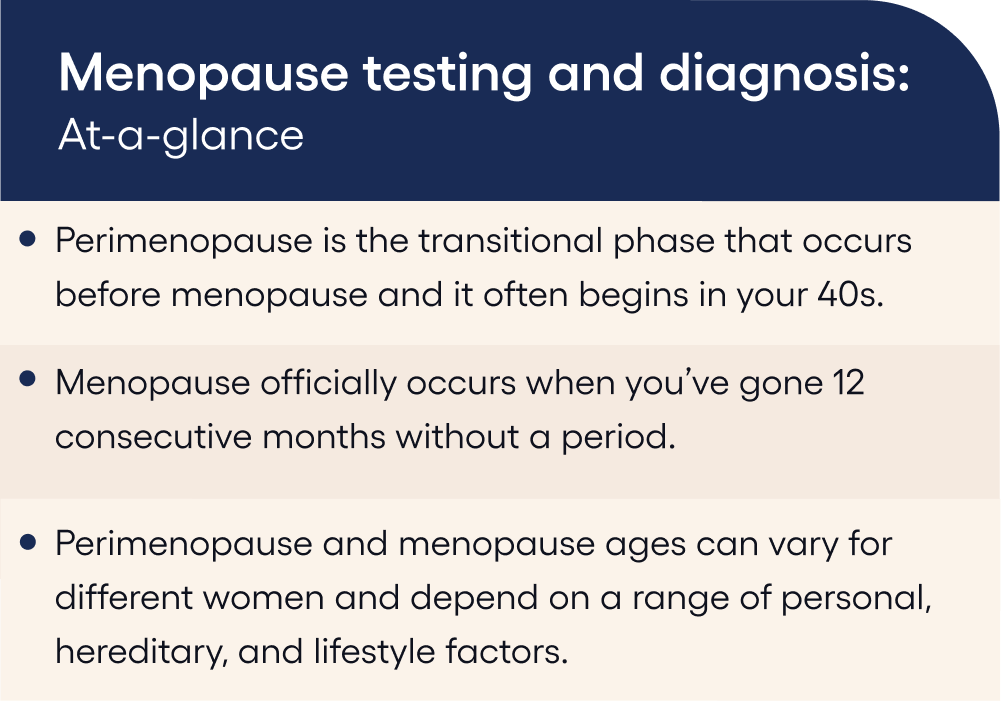
Menopause is defined as the moment you have gone a full year without a period. This happens to all women and it marks the end of your reproductive life since you can no longer get pregnant. Though menopause occurs naturally, it can also occur from a surgical removal of your ovaries or damage to your ovaries by chemotherapy.
The word menopause is also sometimes used when talking about the entire menopausal transition, which can last for several years and includes perimenopause.
Perimenopause is the transition time that leads up to menopause. It’s characterized by irregular periods and other symptoms like hot flashes which are brought on by reduced estrogen and progesterone production.
Postmenopause begins as soon as you’ve hit menopause and lasts the rest of your life. Certain symptoms of perimenopause can continue, though they can change over time and become less intense. It’s worth noting that bleeding from the vagina after menopause is not considered normal. If you find this is happening, consult with a medical professional as soon as possible.
How clinicians determine menopause stage
To diagnose perimenopause or menopause, clinicians typically rely on symptoms, menstrual history, and medical background rather than specific hormone testing. This is because hormone levels can naturally fluctuate significantly, so it’s often more accurate and effective to look at other factors.
During a consultation, they’ll discuss your recent symptoms and any changes in your menstrual cycle. They’ll also check the medications you’re taking, including any hormonal birth control.
In cases where menopause symptoms have begun early (before the age of 40), healthcare providers may perform certain tests to rule out other conditions, like thyroid issues, that can cause symptoms commonly associated with menopause.
Typical menopause timing
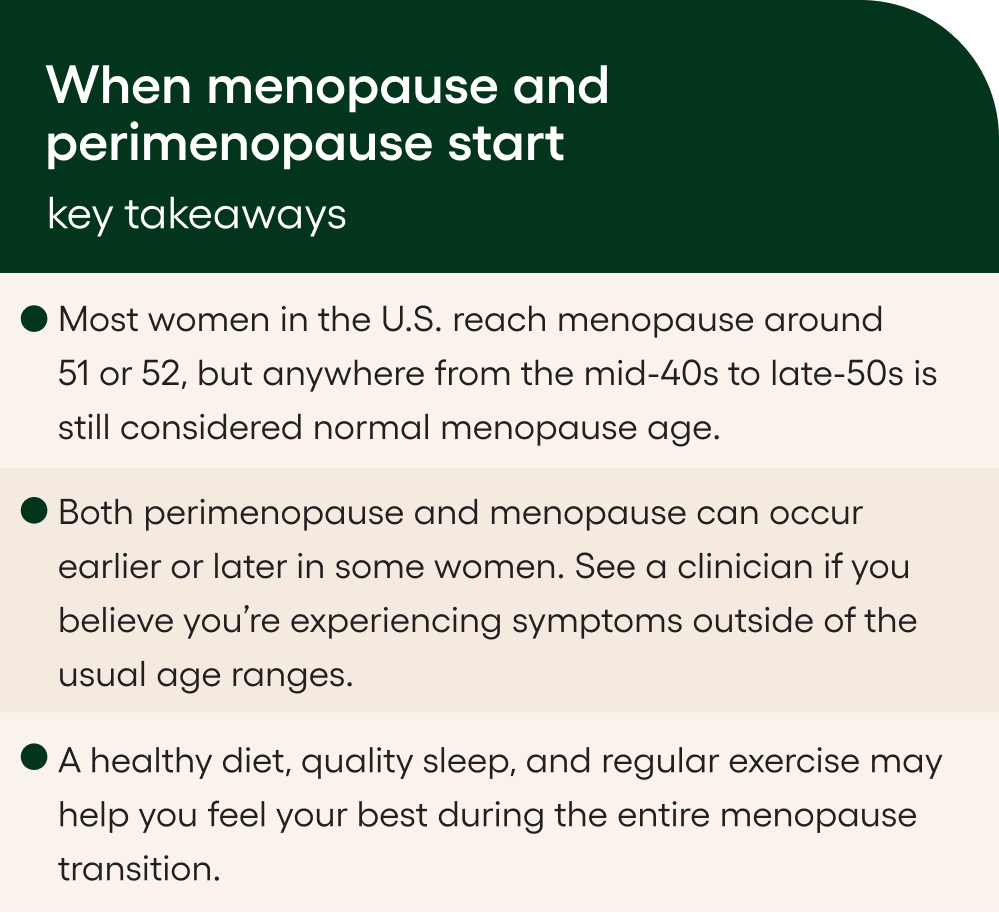
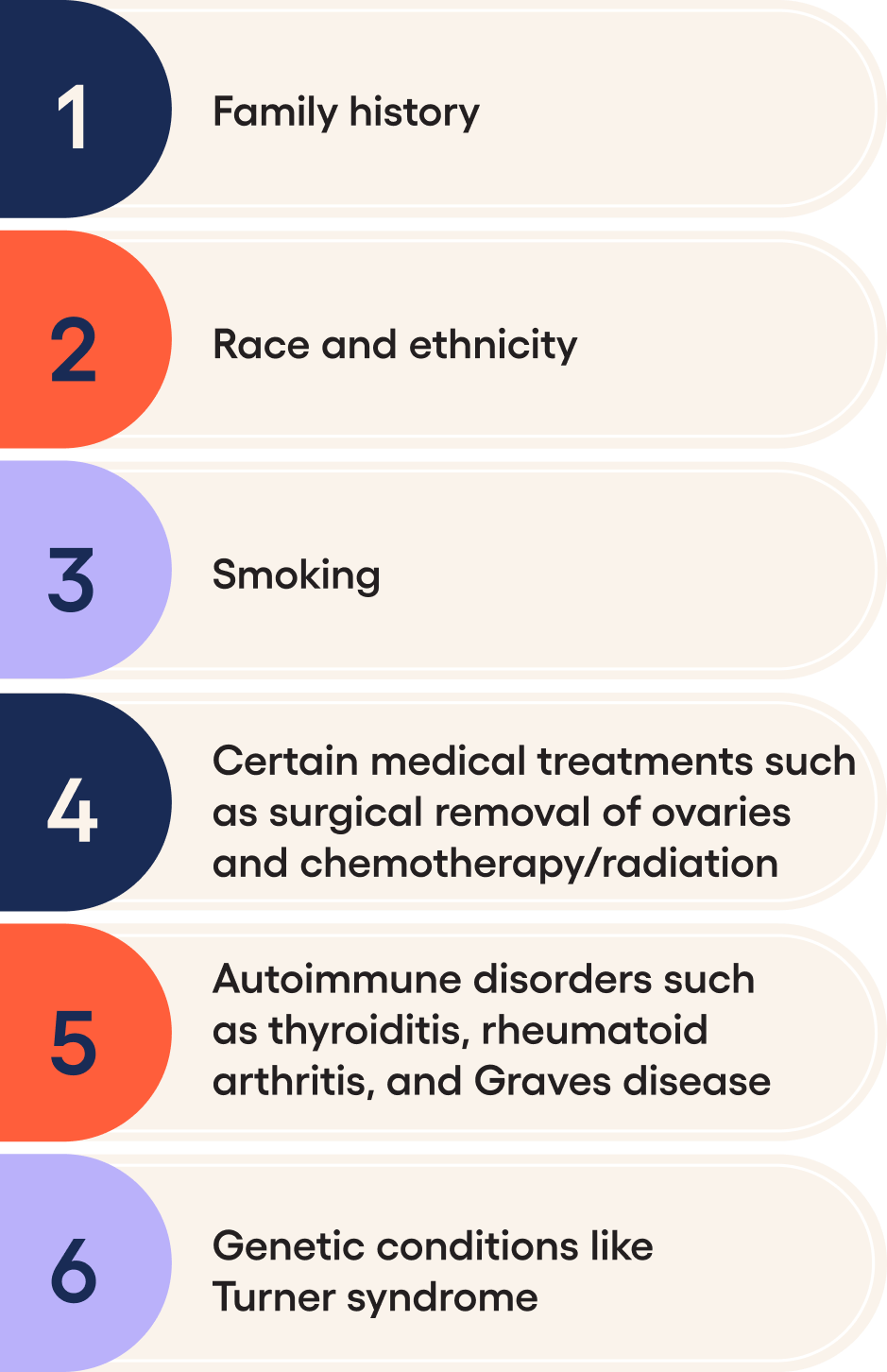
On average, most women in the U.S. reach menopause around the age of 51 or 52. But perimenopause often begins in the mid-to-late 40s — or even earlier for some. Timing can differ widely depending on factors such as:
Average menopause age
Though the average age of menopause is in your early 50s, that doesn’t mean that having it occur earlier or later is cause for concern. Any age from the mid-40s to later 50s is considered in the normal range for menopause age.
Menopause between ages 40 and 45 is considered early menopause, and when it happens before age 40, it’s defined as premature menopause. Around 5% of women in the U.S. go through early menopause, and approximately 1% of women experience premature menopause.
Factors that may shift menopause timing earlier or later
There are a variety of health and lifestyle factors that can influence menopause age and when the transitional perimenopause stage begins. These might be outside of your control, such as family history or underlying health conditions, or related to external factors like lifestyle.
For example, smoking can increase the risk of early menopause, and medical treatments such as chemotherapy, radiation, or surgery to remove the ovaries can also bring it on suddenly. Autoimmune conditions, genetic factors, ethnicity, and the state of your overall health are also key factors affecting menopause age — all can play a significant role in shifting menopause start time earlier or later.
First signs you may be entering perimenopause
Perimenopause can come with a wide range of signs and symptoms, and it can be helpful to know what these are so you can recognize them early on and take steps to manage your well-being. While every woman’s experience is unique and symptoms can vary, there are some common early changes to look for:
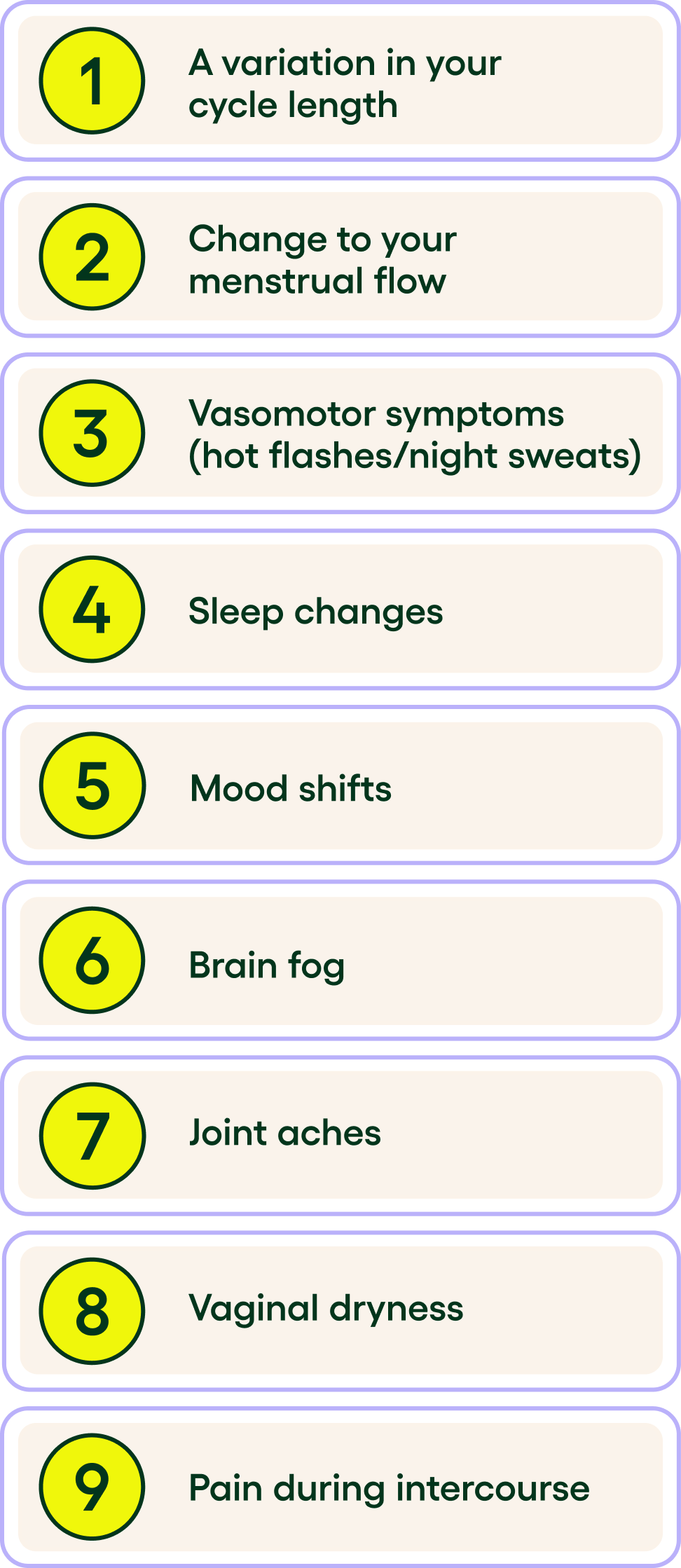
The signs of perimenopause overlap with symptoms of other conditions, including thyroid disorders, some autoimmune disorders, psychiatric conditions like depression and anxiety, medication side effects, and uterine fibroids, so it’s important to go over any health changes with a medical professional for an official diagnosis. Here’s a deeper dive into some of the perimenopause symptoms.
Period and flow changes
Irregular periods are often one of the first signs of perimenopause. You may find that your menstrual cycle becomes less frequent or more frequent due to fluctuations in estrogen levels. Heavy bleeding in perimenopause can also be common, especially if your periods get spaced further apart. Keep in mind that if you’re taking hormonal birth control or have a hormonal IUD, you may be in perimenopause but not notice any changes to your period. And contraception remains important through perimenopause, since you can still get pregnant until you’ve gone 12 months without a period.
Hot flashes, sleep changes, mood shifts, and brain fog
Vasomotor symptoms like hot flashes are common during perimenopause but they can also start after you’ve had your last menstrual period. In most cases, they last for around three to five years and are at their most severe during the year following your last period. Some women may have hot flashes for much longer.
It’s believed that hot flashes begin in the hypothalamus area of the brain where body temperature is controlled. During menopause, the thermostat in a woman's body is suddenly reset at a lower temperature and a hot flash is the body's way of cooling itself down. This is where newer hot flash medications like Veozah and Lynkuet act.
Perimenopause can also cause a range of mental and emotional symptoms that are often linked. For example, if you experience night sweats, you end up not sleeping as well, which can impact your energy levels, concentration, and mood. You may also begin to feel more irritable or anxious. Many women also experience “ brain fog ” during perimenopause, creating issues with memory, concentration, and focus.
Vaginal and urinary changes
Lower levels of estrogen during perimenopause can lead to something called vaginal atrophy. This is when the walls of the vagina become dryer, thinner, and less elastic. This dryness can make intercourse uncomfortable and can also lead to itching and burning.
Reduced estrogen can also contribute to the thinning of the lining of the urethra, which is the tube that empties urine from the bladder. This can lead to urinary tract infections (UTI). You may also notice a more frequent need to urinate, a sudden urge to go even though your bladder isn’t full, and needing to urinate more often during the night. You may also experience urine leakage when you sneeze, cough, or laugh.
Early or premature menopause
If menopause occurs before the age of 45, it’s considered early menopause. If it happens before the age of 40, it’s known as premature menopause.
Both early menopause and premature menopause can have a variety of causes, like if you’ve had surgery to remove your ovaries or undergo chemotherapy or radiation. Other underlying conditions may also play a role. And early menopause can be related to race and genetics, with women in some families experiencing menopause earlier than the average.
If you begin to experience symptoms of premature or early onset menopause, bring it up with your doctor as soon as possible. Early and premature menopause can impact fertility, and the lessened level of estrogen also affects your bone, heart, and brain health. Your healthcare provider can assist you with managing premature and early menopause symptoms, as well as advise you on fertility options and how to stay as healthy as possible.
How clinicians evaluate earlier-than-expected menopause symptoms
When symptoms of menopause arise earlier than expected, clinicians will try to identify the underlying causes and rule out other conditions. They may conduct premature menopause testing, such as blood or urine tests to confirm levels of estradiol, follicle-stimulating hormone (FSH), luteinizing hormone (LH), and other hormones that may impact menstruation.
During menopause, your ovaries become less responsive to FSH and LH hormones, and higher levels of those hormones may be seen as your body tries to compensate. Estradiol and other hormones begin to fluctuate and consistently decline around menopause too. A healthcare expert will be able to test these factors and assess the results to confirm an early menopause diagnosis.

How long perimenopause typically lasts
The menopause transition, from the first signs of perimenopause to actually reaching menopause, commonly lasts around three to four years. However, it can be shorter or last up to a decade. Every woman’s experience of perimenopause can be different and depends on a range of personal factors.
When to see a clinician about menopause symptoms or bleeding
While you should always have regular check-ins with your provider about your menopause symptoms, there are certain times when you should definitely seek medical care. This includes if you’re experiencing very heavy bleeding during perimenopause, have any bleeding at all in postmenopause, have symptoms that are so severe they’re affecting your daily life, and if you notice perimenopause symptoms in your 30s.
Navigating menopause with support
Menopause can feel like a turbulent time of life, but some women also find it empowering — especially if you use it as motivation to take charge of your health and well-being. This can be a great moment to prioritize healthy habits: ensuring you get quality sleep, engaging in regular movement, and having a balanced diet. These kinds of habits could help to ease symptoms and boost your energy levels. Weight Watchers Menopause Program can make sticking to these habits feel a lot easier — and offer you extra support with menopause-specific nutritional guidance, a community of other women going through the same transition, and access to medication if needed. (Medications require eligibility and a prescription. All medical services are provided through our affiliated medical group, Weight Watchers Med+.)
When menopause and perimenopause likely start: key takeaways